- 06 Aug. 2025
On Disclaimer
Earlier this year, I heard prolific Australian performer-composer James Rushford present a recent work for organ, electronics, and voice at a casual gig in the sweaty concrete confines of Melbourne’s No Vacancy gallery. Rushford took a seat behind his portative organ, a small pipe organ he had built in 2018, in a style that fell out of use after the sixteenth century. Often pictured in Renaissance images of Saint Cecilia, the instrument has an antiquated appearance that stokes a contemporary audience’s curiosity more than any table of consumer-grade synths and pedals can. And when Rushford first began, he appeared to be staying true to the instrument’s association with what Western classical music discourse somewhat confusingly refers to as ‘early music’ (chiefly Medieval and Renaissance), sounding out a sequence of wandering melodic figures that would almost have been at home on a David Munrow record, their harmonic support fanning out delicately before retracting into something more skeletal.
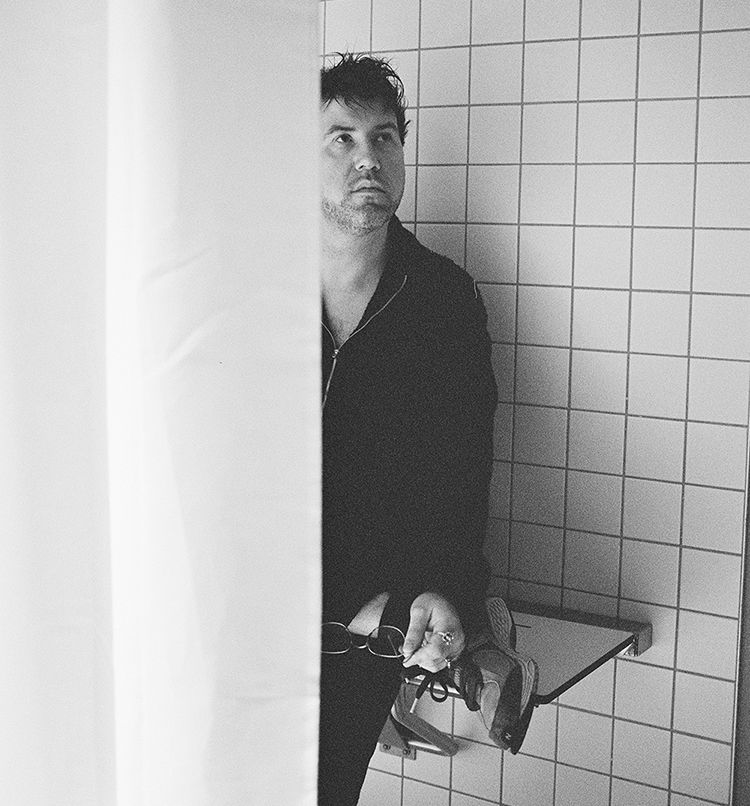
James Rushford, photo by J Davies
However, it gradually became clear that this was not simply a rendition of an obscure mediaeval codex. Glassy electronic tones slowly began to invade the space through the PA. After a few minutes, Rushford’s organ abruptly ceased, giving way to a passage of electronics and processed voice, apparently speaking words but impossible to follow. Returning to the organ, the music became increasingly fragmented over the course of the piece, at times almost comically fast, at other moments hypnotically repetitive, the voices more and more alien, no longer even vaguely linked to the sound of normal speech. Where the use of pre-recorded elements (no rarity in many genres today) can often feel like a mere expedient, here the medium and material were inherently joined, the ghoulish, disembodied voices coming though the PA like incursions from the alternate reality of Poltergeist (1982).
To read this article in full, visit Disclaimer, an LA journal on sound and listening.
- 20 Mar. 2025
Prime Energy
The massive club music of producer and composer Victoria Yam, aka rEmPiT g0dDe$$, quakes with quivering, raucous energy. Her hard trance tracks take traditional tunings of Southeast Asian instruments from Malaysia and the Philippines and combines them with energetic percussion to create bass-heavy club hallucinations. On the aptly titled PRIME ENERGY (2024), released on Yes No Wave Music, traditional instrumentation is woven with warehouse-ready rave production to bring forth a cavalcade of rhythmic industrial club music that propels forwards unstoppably. To call her tracks “huge” doesn’t do justice to the mammoth sound worlds they inhabit: carving through every frequency the human ear can handle – and some more for good measure—rEmPiT g0dDe$$ is an expert of sub-bass bellows and high-frequency synth shrieks. In the face of her mutant club sounds, the dancefloor doesn’t stand a chance.
- 07 Mar. 2025
Lauren Squire
Lauren Squire is an electronic music producer and sound designer. Her practice focuses on experimental and ambient music, underground dance music, installation art and the spaces where these disciplines intersect. As an artist, Lauren forms one half of electronic duo OK EG, alongside her partner Matthew Wilson. Together, they create wholly immersive live sets, superbly textural, ambient techno that ensconces all listeners in reach. Lauren is playing at Gaung Festival as part of our Inter.Sonix series.
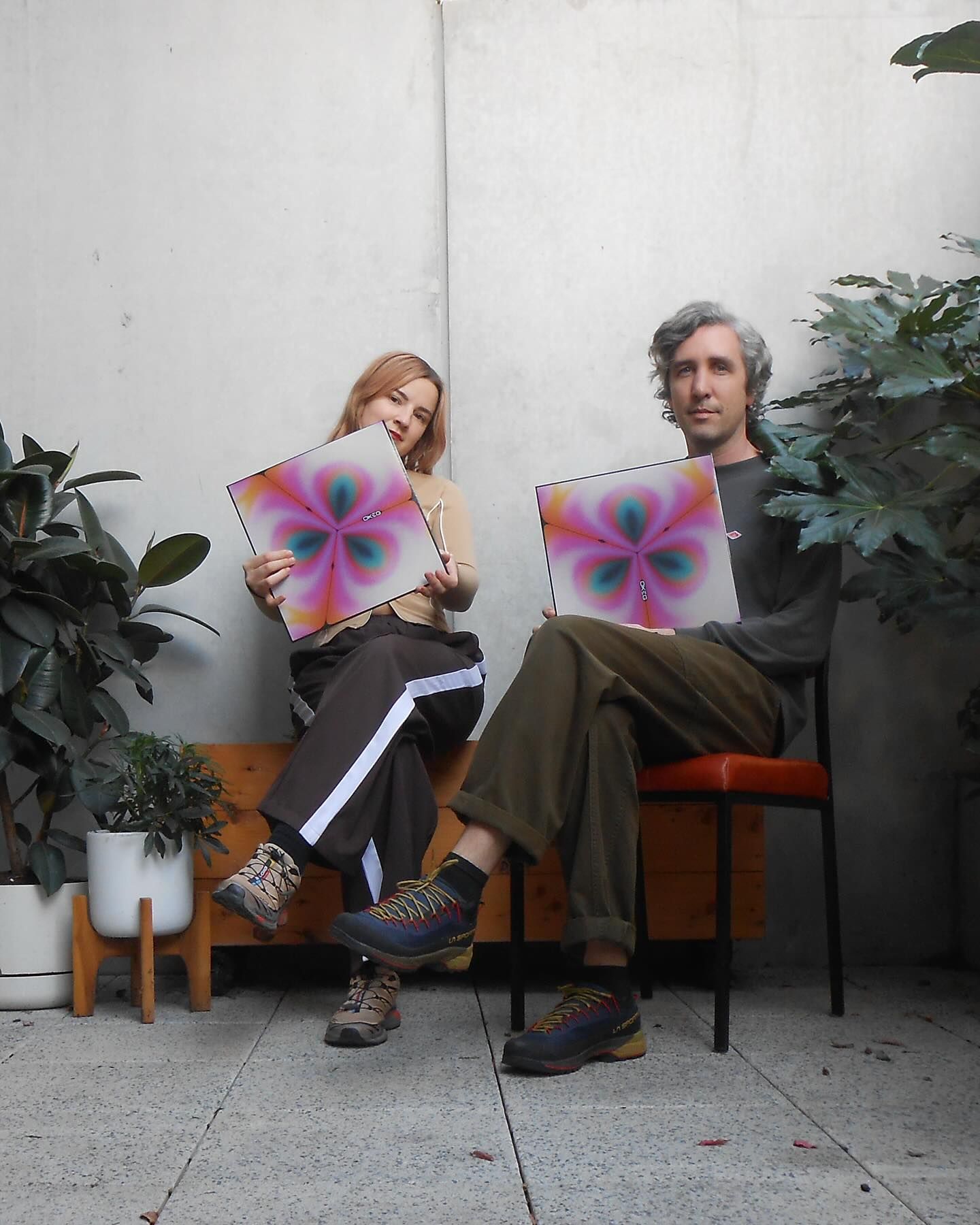
OK EG with copies of their LP ‘Heatwave’ from 2024
- How did you first get involved with synths and electronic sound?
- I sang in chamber choirs from a young age until my late teens. This experience played a key role in my musical development, helping me understand tone and harmony. When I later began exploring synthesis, I found that my background in singing provided a solid foundation for grasping how sounds could be shaped and combined, which made the transition into electronic music feel more natural.
- I began creating electronic music on my laptop in my mid-20s. I had no idea what I was doing and used the limited tools I had access to. My Grandmother gifted me her Kawai FS800, which has been described as “the worst digital synth ever made”. I recorded my voice and keyboard through the macBook microphone and made drum loops with the Apple stock drums on Garage Band. It was complete chaos, but there was creative freedom in not knowing what I was doing. I was having fun and getting ideas out.
- I think this kind of approach has carried on since in my practice. I’m a minimalist when it comes to the tools I use and believe that if the idea is strong, tools can help, but shouldn’t be the defining factor around whether I can or can’t complete a work.
- There was a point earlier on in my career when I began to reach a limit in my technical abilities, and it became frustrating to make music. I was drawn to the nuance and subtleties I was hearing in the dance music being performed and played at various festivals, illegal raves and clubs around Naarm. I wanted to be able to produce on the level of other artists in my scene.
- In 2015, I enrolled in a sound production course at RMIT, where I later completed a Bachelor’s Degree in Sound Design and Composition. Here I met my partner, Matthew Wilson. We developed a strong connection based on our appreciation and love for music and sound. He gave me my very first synth lesson on his Roland SH101. Following this, we started to make music with one another and in 2017 formed under the moniker OK EG. We have been producing together ever since.
- How would you describe the sounds you make today?
- It varies so much. I’m methodical in my practice and am always thinking about how each sound forms the larger part of the composition in the frequency spectrum. I follow an emotional intuition when composing, so it’s dependent on what ideas are being explored.
- 19 Nov. 2024
JOIN OUR BOARD!
Liquid Architecture invites expressions of interest to join our Board, this voluntary but important role will contribute to the governance and strategic direction of Australia’s leading platform for artists working with sound and listening. As a member of Liquid Architecture’s collegial and collaborative Board, your expertise and passion can help us continue to push boundaries, create new possibilities, and sustain meaningful engagement with local and global artistic communities, as Liquid Architecture moves into an exciting new phase.
LA is grounded on Wurundjeri Woi Wurrung Country at Collingwood Yards and is internationally recognised for its curatorial approach, which intersects critical sound practice, experimental music, and contemporary art. We invite individuals from diverse professional, cultural, and artistic backgrounds to help shape our future and expand our relationships with key stakeholders, including First Nations, diasporic communities, and practitioners in Asia and the Pacific. Please note that all Liquid Architecture Board roles are voluntary, in keeping with industry practice and our community values.
For more information about the opportunity, head to the Board Position Description
Please send a CV and brief description of your interest in contributing to Liquid Architecture, highlighting what you would bring to the Board, to Secretary Claire Bredenoord secretary@liquidarchitecture.org.au by Friday 22 November 2024.
Shortlisted applicants will have the opportunity to get further insight into Liquid Architecture’s plans through conversation with other board members before appointment.